 Antigua Guatemala City Guide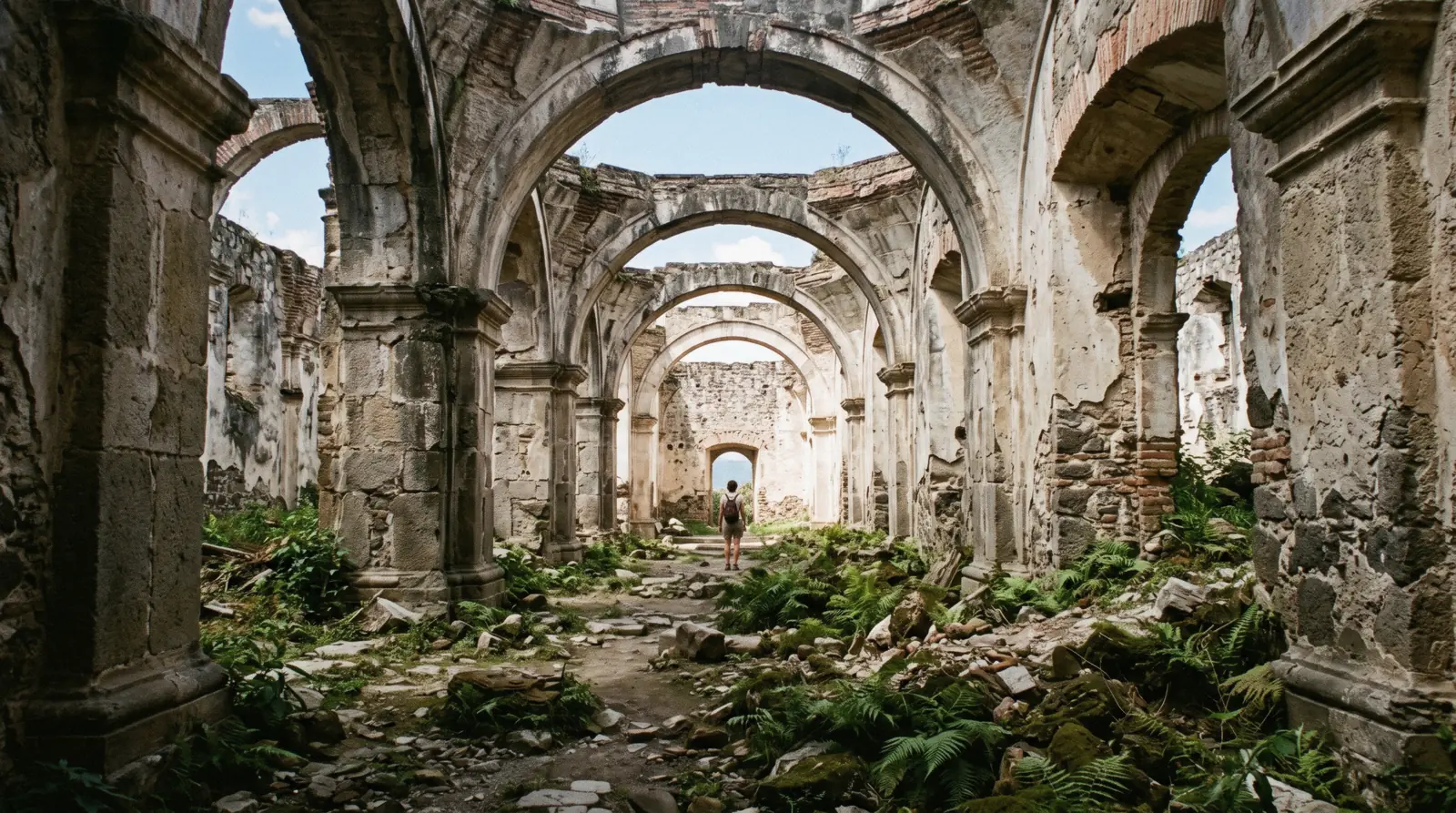
Antigua Guatemala Cathedral (San José)
The Antigua Guatemala cathedral is really two buildings on one block: a working parish church called Iglesia de San José, and beside it the vast shell of the ruined basilica the Santa Marta earthquakes of 1773 left behind. First begun in 1545, rebuilt and inaugurated in 1680, and raised to metropolitan rank in 1743, it anchors the south side of Parque Central. This guide covers what you can enter, how entry works when no official source publishes a fee, and which city walking tours give you the full story.
Quick answer What the Antigua Guatemala cathedral is, and how you visit it
The block holds two things at once. The first is a first build begun in 1545, replaced by a second sanctuary inaugurated in 1680 and consecrated that November. The second is what the Santa Marta earthquakes of 1773 left behind. Today the rebuilt section works as the parish of El Señor San José, created in 1804, while the rest stands as one of the city's great ruins. No official source publishes an entry fee or a timetable for either half.
Key takeaways
- You can walk into both halves, but no official page states a fee or opening hours, so follow the door signage and carry small quetzal notes. The arch corridor one block north is the natural pairing.
- Pedro de Alvarado, the conqueror of Guatemala, is buried here. His remains were reinterred in their niche in December 2007 inside the working parish.
- Short on time? A city highlights walking tour covers the cathedral with the rest of the center, or read our full Parque Central guide to pair the two.
Key facts
Opening hours
| Working parish (Iglesia de San José) | No published hours. Open around Mass times |
|---|---|
| Ruined basilica | No published hours; INGUAT lists the city's ruin sites generally 9:00–17:00 |
Closed None published for either half
Admission
- Adult
- No fee published for either half, nothing official prints a price. Carry small quetzal notes and follow the door signage
Planning it
- Time needed
- Not stated by any authority. Our routing: 20–30 min for both halves
- Book ahead
- Optional — walk-up usually fine
- Address
- Calle de los Pasos, south side of Parque Central, La Antigua Guatemala
Neither the parish nor the ruined basilica publishes a fee, an hours table or a booking page, so the rows below are the honest picture: two free-by-default halves you arrange on the spot, and two walking tours priced by their own operators that fold the cathedral into a wider route.
There is no ticket to buy in advance for the cathedral itself. Your only real cost choice is whether to explore it on your own or take a guided walk that includes it.
| Option | Price | Includes | Cancel | Book |
|---|---|---|---|---|
| Iglesia de San José (working parish)Everyone who wants the living church. No fee is published anywhere official, so entry follows the door signage on the day | The functioning church on the rebuilt section of the block, with Pedro de Alvarado's tomb | Walk in, no booking exists | Official site | |
| Ruined basilica sectionNo published fee or hours; INGUAT lists the city's ruin sites generally 9:00–17:00 without naming this one separately | The breached nave, side chapels, crypt and tunnels behind the parish | Walk in, subject to services or works | Official site | |
| City highlights walking tourFirst-time visitors who want the whole colonial core explained in one outing | Listed at $25 | A small-group circuit of the historic center that covers the cathedral's story among the main sights | Free cancellation up to 24 hours before | Check Availability |
| History-focused walking tourTravellers who care more about earthquakes and architecture than photo stops | Listed at $25 | A slower, history-led walk with extra room for the 1545, 1680 and 1773 story | Free cancellation up to 24 hours before | Check Availability |
Both "$25" rows are guided walks booked on GetYourGuide, not cathedral tickets. The two empty price cells are the finding itself, because no official source prints a fee for either half of the building. Figures and access rules current in Q3 2026.
Cathedral tours and guided walks
The cathedral runs no guided-tour program of its own. What you can book is one of the city walking tours that fold the cathedral's story into a route through the historic center, listed at $25 by their operators. The same two cards render on the things to do hub, which is their home page.
 from $25
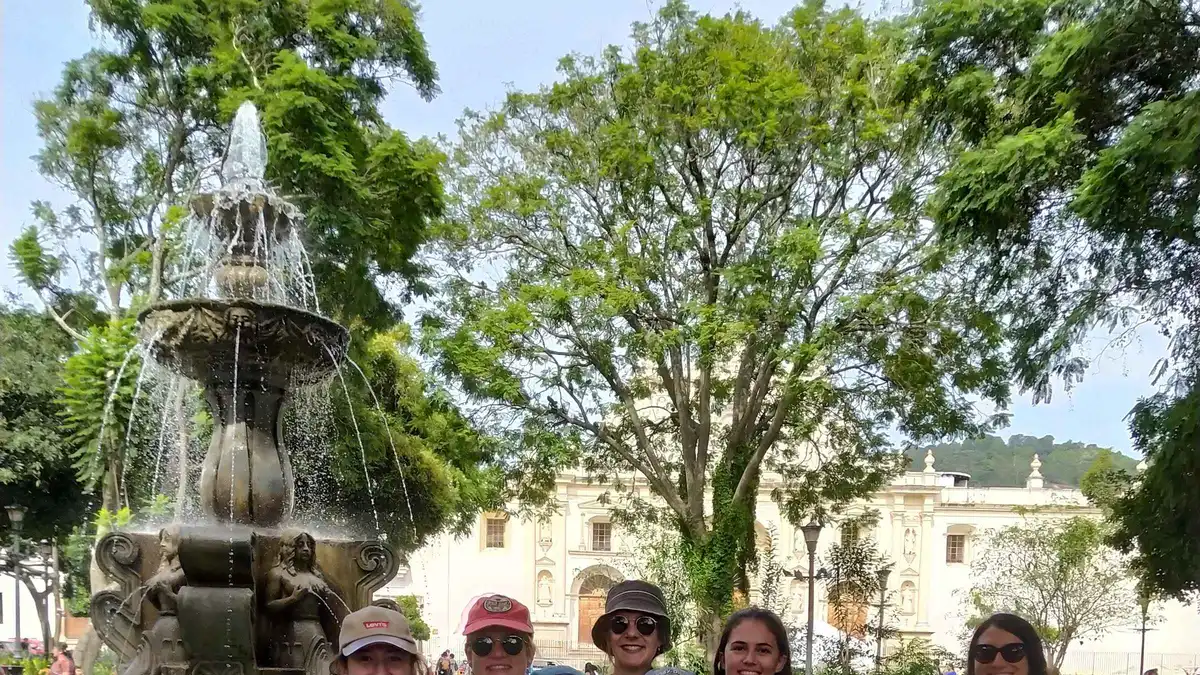
Antigua Guatemala: City Highlights Guided Walking Tour
2.5-hour small-group walk through the grid with a licensed guide; the fastest way to make the ruins and churches mean something.
Check Availability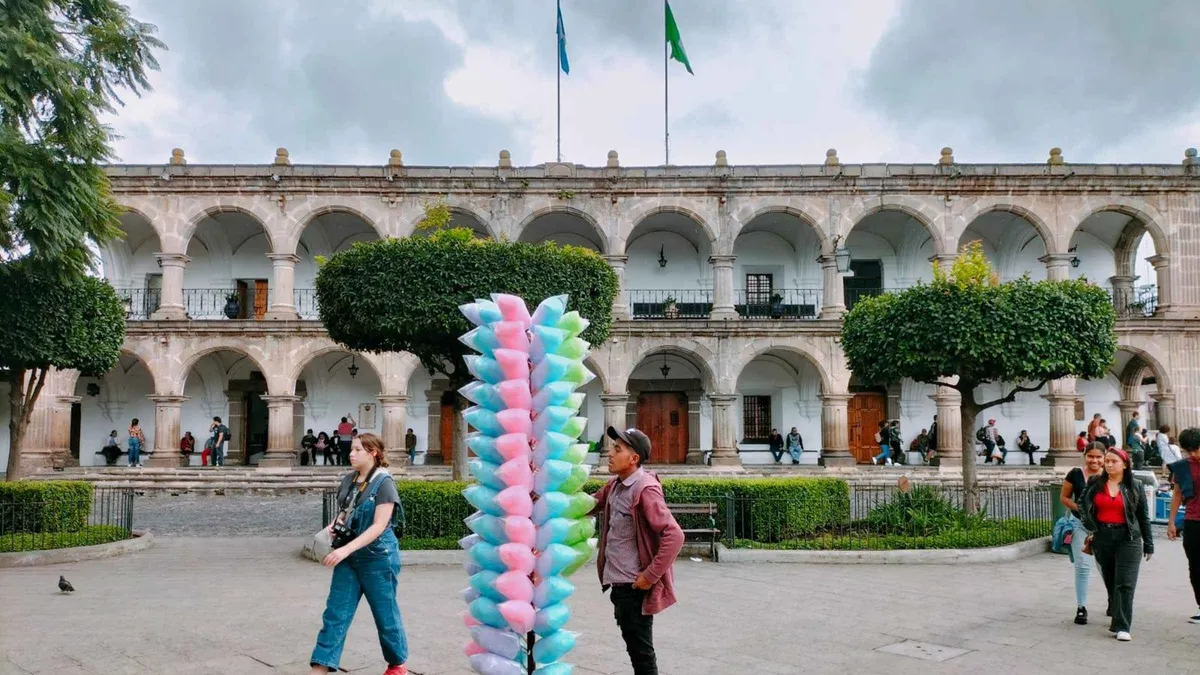 from $25
Antigua walking tour: Highlights, history, culture.
A cheaper 2.5-hour walking tour over the same ground as the top-rated one; fine if you just want orientation.
Check AvailabilityPrices, ratings and details are the platform's own. dollar figures are the listed prices — the platform bills in your account's currency.
What the cathedral is: two buildings in one
The first build (1545) and the great rebuild (1669-1680)
The first cathedral construction began in 1545, when Antigua was the capital of the Spanish kingdom of Guatemala. That building lasted just over a century before it was demolished on 7 April 1669 to make way for something grander. The second sanctuary, a project associated with Juan Pascual and José de Porres, was inaugurated in 1680 and consecrated in November of that same year.
Its scale is what you still read in the ruin walls today.
Metropolitan rank in 1743, ruin in 1773, capital gone by 1780
In 1743 the church was elevated to a Metropolitan cathedral, the seat of an archbishop and the principal church of the kingdom. Thirty years later the Santa Marta earthquakes of 1773 seriously damaged the structure, along with much of the city. The decision that followed changed Central American history: the capital was moved away in 1779-1780, eventually to the new Guatemala City in the valley of La Ermita.
Antigua shrank to a provincial town, and the cathedral lost its congregation and its budget in one stroke.
1804: a parish moves inside the ruins
The practical arrangement you see today dates from 1804, when the parish of El Señor San José was created and the ruins were converted into its home. Remodeling began in 1819, stopped, and restarted in 1832. The working parish occupies the rebuilt section of the old cathedral, which is why a living church with Masses and worshippers sits directly against the shattered nave.
The rest of the enormous 1680 structure remains in ruins, open to visitors who step off Parque Central and walk a few paces south.
The cathedral in ten dates
-
1545
First construction begins
The original cathedral on the block south of the main square is started. [Wikipedia, Antigua Guatemala Cathedral, read for this guide. Facts pack]
-
7 April 1669
Demolition of the old church
The first build is torn down to begin the second sanctuary. [Wikipedia, Antigua Guatemala Cathedral, read for this guide]
-
1680
Second sanctuary inaugurated and consecrated
Inaugurated by Juan Pascual and José de Porres, then consecrated in November. [Wikipedia, Antigua Guatemala Cathedral, read for this guide]
-
1743
Metropolitan cathedral
The church is elevated to the rank of Metropolitan cathedral. [Wikipedia, Antigua Guatemala Cathedral, read for this guide]
-
1773
The Santa Marta earthquakes
The quakes seriously damage the structure and trigger the decision to abandon the capital. [Wikipedia, Antigua Guatemala Cathedral, read for this guide]
-
1779-1780
The capital moves away
Government and church leadership leave for the new capital, leaving the cathedral underused. [Wikipedia, Antigua Guatemala Cathedral, read for this guide]
-
1804
Parish of El Señor San José created
The ruins are converted into the parish church, the arrangement that survives today. [Wikipedia, Antigua Guatemala Cathedral, read for this guide]
-
1819-1832
Parish remodeling, twice begun
Remodeling of the parish section starts in 1819, stops, and restarts in 1832. [Wikipedia, Antigua Guatemala Cathedral, read for this guide]
-
1874
The bell towers fall
An earthquake costs the parish its bell towers, which are never rebuilt. [Wikipedia, Antigua Guatemala Cathedral, read for this guide]
-
December 2007
Alvarado reinterred
The remains of Pedro de Alvarado are placed back in their niche in the parish. [Wikipedia, Antigua Guatemala Cathedral, read for this guide]
Inside the parish
A living church with a conquistador in the wall
The parish of El Señor San José is not a museum. It holds services, baptisms and weddings for the city, and it is the half of the block that matters most to Antiguans. Its most famous resident is Pedro de Alvarado, the conquistador who led the Spanish conquest of Guatemala, whose remains were reinterred in their niche in December 2007.
His tomb is one of the specific reasons history-minded travellers step inside, and one of the questions this page is asked most: yes, Alvarado is buried here, in the working parish.
The facade and the 1976 earthquake
The parish facade was damaged in the 1976 earthquake, one of the most destructive in modern Guatemalan history. Look up at the carved stone as you cross the park and you are reading a facade that has survived 1773, 1874 and 1976 in some form. The survival of the rebuilt section while the rest collapsed into ruin is the visual summary of the whole site.
How entry works when nothing is published
Here is the honest finding: no parish website exists with extractable content, INGUAT's official Antigua page lists no fee, and no official source publishes entry terms or a timetable. In practice visitors enter through the door facing Parque Central, and any charge or donation request is posted at the door rather than online. Carry small quetzal notes, dress as you would for any church, and accept that if a Mass is under way the parish belongs to the worshippers first.
The caution about Mass times is not decorative: services take priority over sightseeing, and the door may simply be closed when a service is on.
Inside the ruins
What you are walking through
Behind and beside the parish, the ruined basilica shows the scale of the 1680 cathedral in a way no drawing can. The nave is breached and roofless. The ruins retain a crypt and tunnels whose usefulness is unknown, a phrase that comes straight from the historical record and is part of the site's intrigue.
The 1874 earthquake cost the parish its bell towers, which explains the stumps you see from the park side. Columns, side chapels and doorways give you the footprint of what was once the principal church of Central America.
The 9:00-17:00 question, answered honestly
INGUAT, the national tourism institute, lists Antigua's convent and ruin sites generally from 9:00 to 17:00. That general line covers the city's ruin sites as a category. For the cathedral ruins specifically, no official source publishes hours, a fee or closed days, and our search of municipal and church sources found nothing extractable.
So the honest instruction is this: expect the ruins to follow the general 9:00-17:00 pattern, check the signage at the entrance on the day, and treat any posted donation box as the real entry rule.
Can you go inside? Yes, with caveats
Visitors can go inside the ruins, and most do it in the same visit as the parish, moving between the living church and the broken nave. Access can be limited during services, events or works, and there is no published schedule announcing those closures in advance. If you want the ruins explained rather than just photographed, the history-focused walking tour is the cleanest way to do it.
How much time to give the cathedral
Our routing, from the door
No authority publishes a recommended visit length for the Antigua Guatemala cathedral, so the figures below are our own routing estimates from door to door. They assume you are walking, starting from the park side, and not attending a service. Add time if you want to sit in the parish or read every interpretive panel in the ruins.
| Routing | What you get | What it skips | Door to door |
|---|---|---|---|
| Short visit, parish only | The working church, Alvarado's tomb, the facade from the park side | The ruined nave and crypt area | About 20 minutes |
| Full visit, both halves | The parish plus the breached nave, chapels and ruined footprint | Nothing on the block itself | About 40–45 minutes |
| With a guided walk | The city highlights tour explains the cathedral in context with the rest of the center | Deep independent time in the ruins | Roughly 20–30 cathedral minutes inside a longer circuit |
Hours, Mass times and the quiet slots
The negative finding, stated plainly
Neither half of the cathedral publishes opening hours. No parish website exists with a timetable, INGUAT's official Antigua page gives none for this site, and the church has no extractable official page. That is the signature result of our research, and we print it where an hours table would normally sit rather than pad it with guesses.
- Working parish: no published hours. Open around Mass times, which are themselves not listed online.
- Ruined basilica: no published hours. INGUAT lists the city's ruin sites generally 9:00-17:00.
- Closed days: none published for either half.
- Practical rhythm: early morning gives the best light on the park side and the thinnest crowds, but remember services take priority inside the parish.
Do
- Carry small quetzal notes so any posted donation at the door is easy to honor.
- Visit both halves in one pass, parish first, then the ruins behind it.
- Go early on the park side for quiet and good light on the facade.
- Step aside and lower your voice if a service is under way.
- Pair the cathedral with Parque Central right in front of it, they are one stop.
Don't
- Do not plan around a fixed opening time, because none is published anywhere official.
- Do not photograph worshippers or services inside the parish.
- Do not expect a ticket office or printed price, there is none.
- Do not skip the ruins because the outside looks modest from the park, the nave is the point.
- Do not leave bags or valuables unattended while you take photos, the block is busy.
Five things most visitors do not know about the Antigua cathedral
Details that change how you look at it
- 1545 is the starting date. The first church on this block is among the oldest ecclesiastical foundations in the country [Wikipedia, Antigua Guatemala Cathedral, read for this guide]. - The 1669 demolition came before the rebuild, not after an earlier disaster. The first build was torn down on 7 April 1669 so the grander second sanctuary could rise [Wikipedia, Antigua Guatemala Cathedral]. - The parish remodel was abandoned for over a decade. Remodeling began in 1819, stopped, and only restarted in 1832 [Wikipedia, Antigua Guatemala Cathedral]. - Nobody knows what the tunnels were for. The ruins retain a crypt and tunnels "whose usefulness is unknown", in the wording of the historical record [Wikipedia, Antigua Guatemala Cathedral]. - A ruin has been a working parish since 1804. The parish of El Señor San José was created that year inside the ruined block, which is why Mass and rubble share one footprint [Wikipedia, Antigua Guatemala Cathedral].
The cathedral sits on Calle de los Pasos on the south side of Parque Central, which puts it at the center of a compact walking cluster. Everything on this map is within a few minutes on foot, so you can do the cathedral, the park, the arch and La Merced in one unhurried circuit without transport of any kind.
Next stop from the cathedral
Walk minutes are our estimates from the GPS distances. Everything here is north of the cathedral doors.
Parque Central
The main square is directly across the street. Benches, the mermaid fountain and the best people-watching in the city.
About 100 mSanta Catalina Arch
Walk north into 5a Avenida Norte and the arch frames the street ahead, with Volcán de Agua behind it.
About 200 mAntigua Guatemala Cathedral questions
Is the Antigua Guatemala cathedral free to enter?
No official source publishes an entry fee for either the parish or the ruins. In practice you enter through the doors facing Parque Central and any donation request is posted at the door rather than online.
What happened to the cathedral in the 1773 earthquake?
The Santa Marta earthquakes of 1773 seriously damaged the structure. The capital was then moved away in 1779-1780, and the cathedral lost its role, leading to the ruined nave you see today beside the working parish. Read the full sequence in the history section, or hear it told on a walking tour.
Where is Pedro de Alvarado buried?
The conqueror of Guatemala is buried in the parish of El Señor San José, the working church inside the cathedral block. His remains were reinterred in their niche in December 2007. The niche stands in the working parish, a step south of Parque Central.
Can you go inside the cathedral ruins in Antigua?
Yes. Visitors walk into the breached nave and chapels behind the parish. INGUAT lists the city's ruin sites generally 9:00-17:00, though this site publishes no hours of its own, and a guided walk is the easiest way to get it explained.
Is the cathedral still a working church?
Yes. The rebuilt section has operated as the parish of El Señor San José since 1804, holding regular services. Sightseeing yields to worship, so plan around Mass times rather than a published schedule, and see our planning guide for how to sequence a visit.
How long do you need at the cathedral?
No authority states a visit length. Our routing gives about 20 minutes for the parish alone and 40-45 minutes for both halves, or roughly 20-30 minutes of cathedral time within a highlights walking tour.
Where the cathedral fits in an Antigua day
Sequencing the block
Put the cathedral at the start of a center-day. It opens your mental map of the colonial grid, it sits on the main square, and from its doors you can walk the full things-to-do spine of the city on foot. A workable order is the cathedral and parish first, then Parque Central, then north to the arch and La Merced.
If you are building a longer stay, our plan page lays out full-day routes, and the homepage keeps the latest practical findings in one place. INGUAT recommends three to four days in Antigua for travellers who want the ruins and museums done properly.
Eating and drinking around the cathedral block
The block fronts the park, which puts three citable venues and one official sweet shop within a two-minute walk. None of them publishes menu prices online, so none are printed here.
On the park itself
Café Condesa occupies the colonial mansion on the Central Park and has served its farm-to-table menu since 1993, with the house coffee sourced from Antigua's own valley. The address and hours are not stated on its site, so follow the park's north-east corner and the queue. For something sweeter, INGUAT's official article on the city's typical sweets names Doña María Gordillo, a dulcería whose recipes date to 1872, though the article gives no street address either.
Two blocks north
Luna de Miel, the French crêperie at 6a Avenida Norte N40, opens Sunday to Thursday 10:00–21:00 and Friday to Saturday 10:00–22:00, takes no reservations, and its own site jokes that it closes for Fuego activity and French rugby results. Cerveteca El Arco at 5a Avenida Norte 20A pours four house beers daily 10am–11pm: Muy Noble blonde, Don Nadie amber, Sin Novia IPA and the Cucurucho stout, with the nitro version exclusive to the taproom. Full listings sit on where to eat and cafes and coffee shops.
The cathedral block on film
Three verified walk-throughs of the historic centre that pass the cathedral, the park and the arch in sequence, so you can see the block before you stand on it.
Antigua, Guatemala | 4K60fps | Walking Tour w/ Captions
A captioned street-level walk through the centre that takes in the cathedral's park-side setting.
Video: Backpack Gringo4K Guatemala Walk, Antigua City Center | A Beautiful Colonial City Surrounded by Volcanoes
The grid on foot with the volcanoes behind it, including the streets around the cathedral block.
Video: 4K Walking TravelAntigua Guatemala walking tour on historical center 4K
A historical-centre circuit that pairs the cathedral with the arch corridor and La Merced.
Video: Wandering PeteVideos load from YouTube only when you press play.
Prices, hours and terms are set by the venue or operator and confirmed at checkout.
We may earn a commission if you book through one of our links, at no extra cost to you. Full affiliate disclosure