 Antigua Guatemala City Guide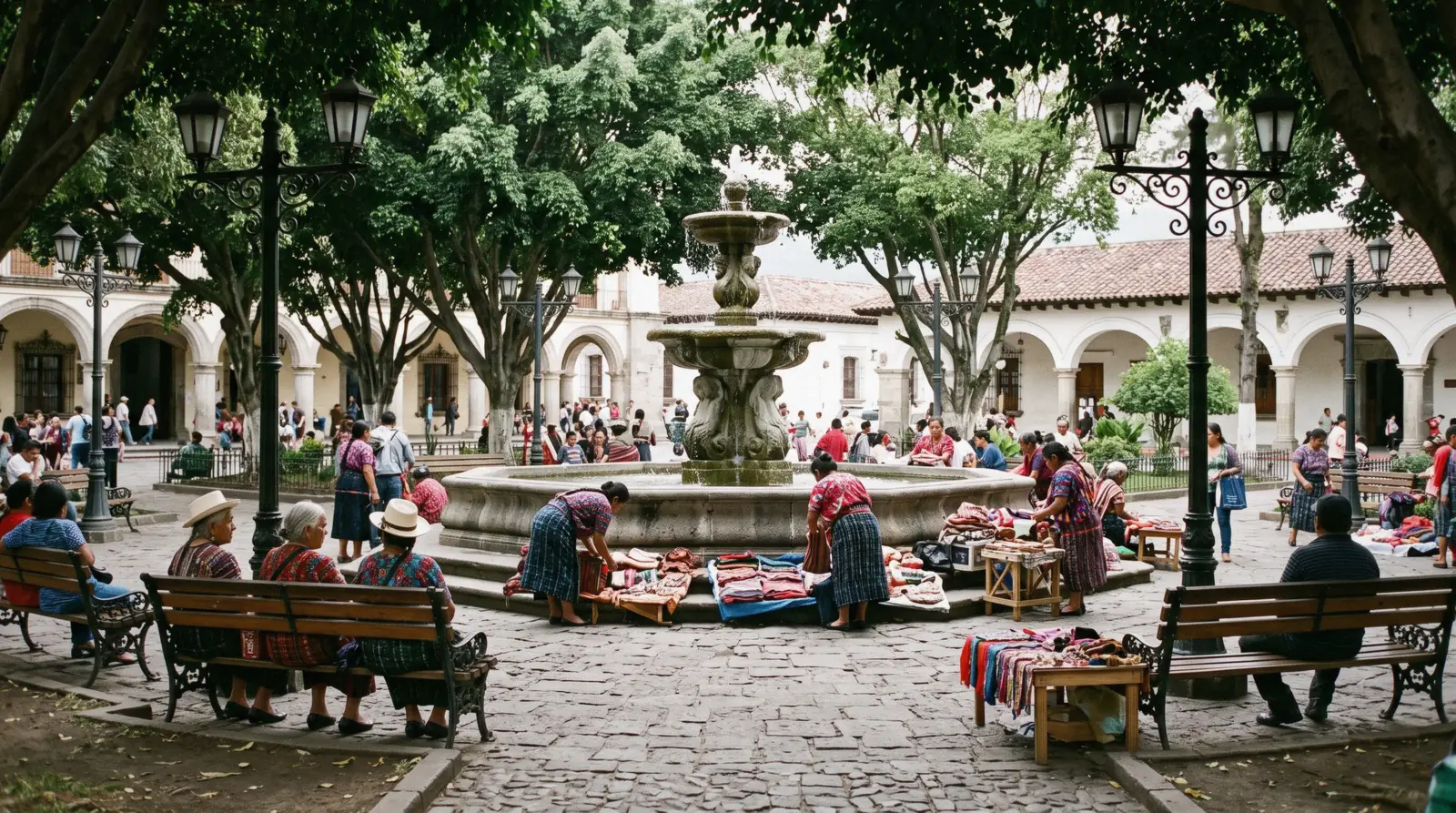
Parque Central, Antigua Guatemala
Parque Central, Antigua Guatemala's main square, has been called Plaza Mayor, Plaza Real and Plaza de Armas across its history, and Parque Central today. The 1737 Fuente de las Sirenas of Diego de Porres holds the middle, and the twin colonial palaces frame the long sides with the cathedral at the corner. The square is free public ground, open around the clock, and it is the natural base for the whole center. Start here, then walk to the cathedral on the south side and the yellow arch two blocks away.
Quick answer What the square is, what it costs, how long, what to pair
Parque Central is the main square of Antigua Guatemala, framed by the cathedral, the Palacio de los Capitanes and the Palacio del Ayuntamiento, with the 1737 Fuente de las Sirenas of Diego de Porres at its center. It is free public ground, open around the clock, and most visitors give it 15 to 30 minutes between sights. It is also the meeting point of the city highlights walking tour, and the natural first stop of any visit.
Key takeaways
- The mermaid fountain dates to 1737 and the full story, including why other dates circulate, is in the fountain section.
- The two colonial palaces that frame the square are explained in the palaces section.
- The arch corridor starts two blocks away, see the arch guide and the map.
Key facts
Opening hours
| Open square | Public ground, open around the clock, no gate and no published rules |
|---|
Closed None
Planning it
- Time needed
- Not stated by any authority. Our routing: 15-30 minutes to sit and circle it, longer as a base between sights
- Address
- 4a Calle Oriente y 4a Avenida Sur, La Antigua Guatemala (central square)
The table pairs the free public square with the two walking tours that meet at or near its fountain, figures from the operators' listings. Figures were read from the sources cited in this guide in Q3 2026.
The square costs nothing, so the only money decision on the park is whether to see it alone or with a guide who starts here anyway.
| Option | Price | Includes | Cancel | Book |
|---|---|---|---|---|
| The square itselfEveryone, this is the zero-cost center of any visit | Free | Public ground, open around the clock, benches, shade and the fountain | Nothing to cancel | Official site |
| City highlights walking tourFirst mornings, the tour that starts where you are probably standing anyway | Listed at $25 | Licensed small-group guide, meets by the central fountain | Free cancellation up to 24 hours before | Check Availability |
| History and culture walking tourTravelers who want the earthquakes and the politics behind the facades | Listed at $25 | A slower, story-led circuit over the same ground | Free cancellation up to 24 hours before | Check Availability |
The $25 rows are guided walks, not park tickets.
Walking Tours That Start at the Park
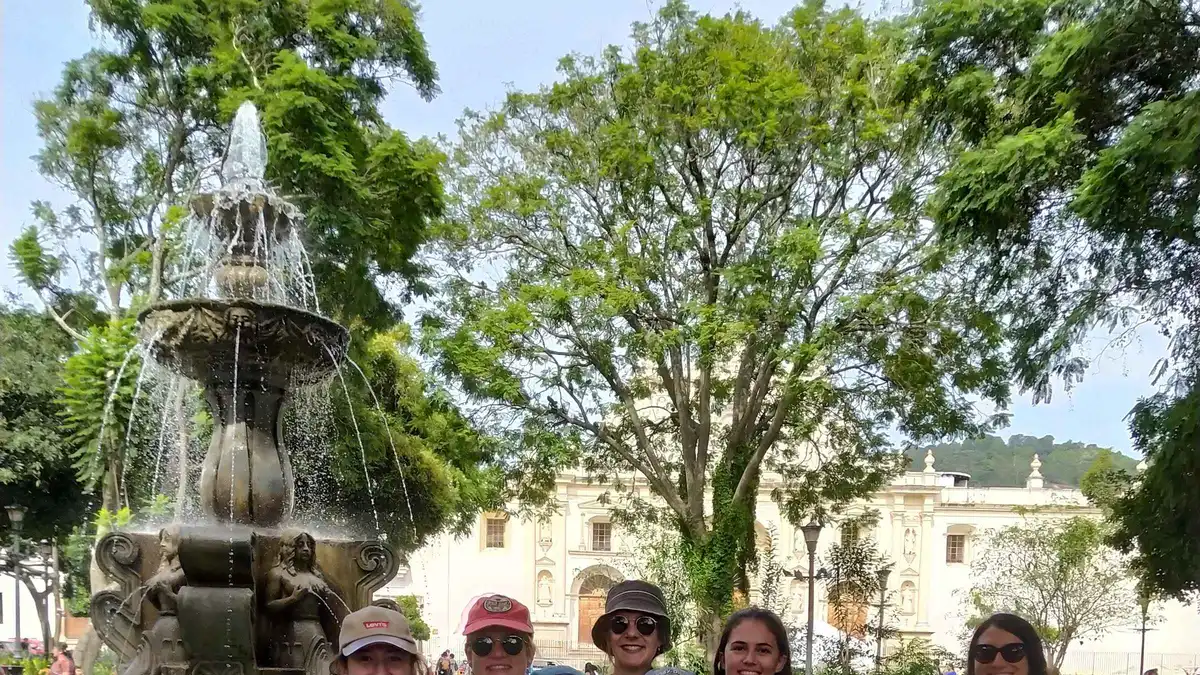
The square is the classic meeting point, and the highlights card names the central fountain as its meeting place. Both are small group walks with licensed guides listed at $25, and both cancel free up to 24 hours before.
 from $25
Antigua Guatemala: City Highlights Guided Walking Tour
2.5-hour small-group walk through the grid with a licensed guide; the fastest way to make the ruins and churches mean something.
Check Availability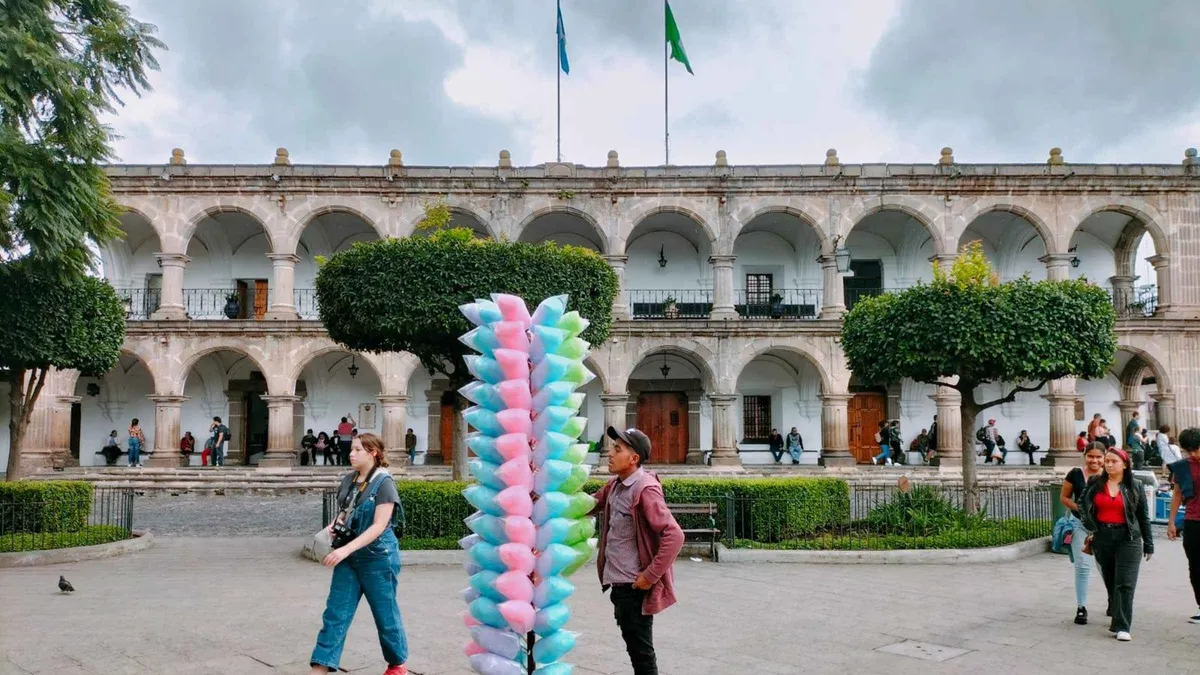 from $25
Antigua walking tour: Highlights, history, culture.
A cheaper 2.5-hour walking tour over the same ground as the top-rated one; fine if you just want orientation.
Check AvailabilityPrices, ratings and details are the platform's own. dollar figures are the listed prices — the platform bills in your account's currency.
What Parque Central Is
Three names for one square
The grid of Antigua has always had a center, and this is it. Across its history the square has been called Plaza Mayor, Plaza Real and Plaza de Armas, and today everyone says Parque Central. The cathedral sits on the south side and the government palaces run along the long sides, so the block reads as one composition rather than a park with buildings around it.
The record we checked is thin on the square itself but specific on its parts, from the fountain to the two palaces. Wikidata even carries a separate item for the fountain alone, which tells you how much weight this one block carries in the city's identity. If you orient yourself here, the rest of the grid falls into place.
The living room of the city
Day to day, the square works like a living room. Benches run under the trees, shoe shine men work the corners, vendors pass with snacks and textiles, and families claim the shade through the afternoon. The tuk-tuk queue waits at the edge of the square, ready to carry anyone who does not want to walk.
Tour groups gather by the fountain, because that is the reference point everyone uses. None of this is in an official description, since no official page describes daily life here either. It is simply what happens on the square, and it is half the reason to come.
How the grid hangs off the square
Use the square to learn the grid in one move. The avenidas run north to south and the calles east to west, numbered outward from the lines that pass the square, so an address like 5a Avenida Norte means the avenue running north on the square's east side. Nearly every sight on the things-to-do list sits within a ten-minute walk, and the square tells you which quadrant.
The arch corridor climbs northwest, the market sits west, and the ruins fan out south and east. Locals give directions from the fountain, and once you do the same, the grid stops being confusing.
The Fuente de las Sirenas
The date, and the confusion around it
Here is the fact, plainly. The Fuente de las Sirenas, the Mermaid Fountain, was built by Diego de Porres in 1737. That is the date the checked record gives.
Other dates, all a few years later, circulate in print and online, and the confusion persists for a simple reason: no official municipal page describes the fountain's history at all. When the muni stays silent, guidebooks copy each other and the dates drift. This guide prints 1737 and nothing else, because that is what the source we checked supports.
One more marker of how much the fountain matters: it carries its own Wikidata item, a rare honor for a fountain. If you read another year elsewhere, you now know why.
What you actually look at
The fountain stands at the square's center, a bronze-cast composition of mermaids and figures around a basin. It is the classic meeting point, and every local who gives you directions will say "at the fountain". It is also the square's photographic center, the shot everyone takes first.
What the record we checked documents is the builder and the date, not a detailed iconography, so this page will not invent one. Look at it, sit on a bench facing it, and use it as your anchor. From here, every other sight in the center is a short walk with an easy direction.
The Twin Palaces
Palacio de los Capitanes
On the square's long side stands the Palacio de los Capitanes, the royal houses of the colonial capital. Construction started in 1558, and the complex housed the Captain General and the Real Audiencia, the court that governed the kingdom from here. Inside it held the Royal Treasury, a jail, army quarters and the Hall of Arms, which tells you this was the seat of real power, not ceremony.
Today it holds INGUAT offices, the National Police headquarters and the Sacatepéquez Governor's office. There is no museum inside. The visit is the facade and the arcade, so walk the length of it and read the arches.
That is the intended experience.
Palacio del Ayuntamiento
Across the square, the Palacio del Ayuntamiento is the City Hall, built after the 1751 San Casimiro earthquake, with the Jesuit plaza works finished in 1753. The arcaded facade is one of the square's signature lines, two stories of arches facing the fountain. The building still serves the city government, so this remains a working palace rather than a museum.
There is no public tour or ticket, and the record we checked does not list any visitor facilities inside. Treat it as architecture to circle rather than a site to enter. Between the two palaces you get the full colonial civic ensemble that made this square the center of the kingdom.
How Much Time to Give the Park
No authority publishes a visit length for a public square, so these are our own routings.
Three ways to do it
Decide what the square is for your day, a crossing, a stop or a base. The table gives the honest cost of each.
| Routing | What you get | What it skips | Door to door |
|---|---|---|---|
| Pass through | The fountain, a bench and the facade lines | Both palaces up close and the ruins | 10-15 minutes |
| The square proper | A full circle: fountain, both palaces, the cathedral facade, the arcade life | The museum interiors around the square | 30-45 minutes |
| As a tour base | The highlights tour starts at the fountain and loops the center | Sitting still, the guides keep moving | The square anchors a longer circuit |
The Square in Six Dates
The documented skeleton of the square, from the dates the record actually supports.
-
1558
The royal houses begin
Construction of the Captain General and Real Audiencia complex starts. [English Wikipedia, Antigua Guatemala]
-
1737
The mermaid fountain
Diego de Porres builds the Fuente de las Sirenas. [English Wikipedia, Antigua Guatemala]
-
1751
The San Casimiro earthquake
The quake that leads to the new City Hall. [English Wikipedia, Antigua Guatemala]
-
17 July 1753
The plaza works finish
The Jesuit plaza works finish, a year and a half after the quake that prompted them. [English Wikipedia, Antigua Guatemala]
-
1773
The Santa Marta earthquakes
The quakes that end the capital. [English Wikipedia, Antigua Guatemala]
-
1979
UNESCO inscription
The square sits inside the World Heritage listing. [English Wikipedia, Antigua Guatemala]
Sourced from the English Wikipedia article on Antigua Guatemala and the park's Wikidata records, read for this guide.
A public square needs no tickets, just a little judgment.
Do
- Sit on a bench and treat the square as the city's living room, not a checkpoint.
- Use the fountain as your meeting point, it is what locals give as an address.
- Walk the arcades of both palaces for the facade lines.
- Pair it with the cathedral on the south side and the arch two blocks northwest.
- Come at dusk when the lights come on and the heat drops.
Don't
- Don't expect a ticket office or opening hour, there is none.
- Don't mistake the palaces for museums, the facades and arcades are the visit.
- Don't leave phones or bags loose on the benches while you take photos.
- Don't pay more than the Q10 ($1.31) municipal tuk-tuk tariff without agreeing first.
- Don't skip the side streets, the square is the start of the grid, not all of it.
Five Things Most Visitors Do Not Know About the Square
The record behind the park benches, each bullet tied to its source.
The details
- The square has held three official names across its history, Plaza Mayor, Plaza Real and Plaza de Armas, before today's Parque Central [English Wikipedia, Antigua Guatemala]. - The mermaid fountain's builder Diego de Porres also built the current San Francisco church across town [English Wikipedia, Antigua Guatemala]. - The Captain General's palace complex held a mint's worth of functions, treasury, jail, army quarters and the Hall of Arms [English Wikipedia, Antigua Guatemala]. - The fountain carries its own Wikidata item, separate from the square's [Wikidata, Q128038989]. - No official municipal page describes the fountain's history, which is why every printed date you read deserves a second look [checked sources, facts pack].
The square sits at the center of the colonial grid, with the cathedral on one side and the arch corridor a couple of blocks off. Everything on this map is within a few minutes on foot.
Next Stop From the Square
Walk minutes are our estimates from the GPS distances.
Antigua Guatemala Cathedral
The parish of San Jose and the ruined basilica sit right off the square, with Pedro de Alvarado's tomb inside. Full details in the cathedral guide.
Across the streetSanta Catalina Arch
The yellow convent bridge over 5a Avenida Norte, with the classic Agua volcano photo through it. Route and history in the arch guide.
About 250 mMercado municipal
The working market where the city actually shops, a different rhythm from the square. How to work it in the market guide.
About 700 mParque Central: Questions
What is the name of the main square in Antigua Guatemala?
It is called Parque Central today. Across earlier centuries it carried the names Plaza Mayor, Plaza Real and Plaza de Armas, all covered in the names section.
What is the history of the Fuente de las Sirenas?
The mermaid fountain was built by Diego de Porres in 1737, the date the checked record gives. Other dates circulate because no official municipal page documents the fountain, which we explain in the fountain section.
Is Parque Central safe to sit in?
It is a busy square by day, and the usual city-square caution applies, keep phones and bags close, especially at night. Tourist police operate in the city, see the safety page.
How long should you spend at Parque Central?
Give it 15 to 30 minutes as a stop, longer as a base between sights. The routings are laid out in the time section.
Can you go inside the palaces on the square?
There is no museum visit in either. The Capitanes holds government offices and the Ayuntamiento the city government, so the arcades and facades are the visit, as described in the palaces section.
Where do the walking tours meet in Antigua?
At or by the central fountain, and the highlights card names it as its meeting point. Details on the tour card.
Is there anywhere to eat on Parque Central?
Yes, the cafe in the colonial mansion on the park itself is the institution, and the crêperie and the brewery taproom sit two blocks toward the arch. The honest caveat is that almost none of them publish prices online. The shortlist is in the eating section.
The Square Day to Day
Morning to night
Our read of the square's rhythm, our observation rather than an official description, since none exists. Early the square is quiet, with a few walkers and the sweepers. Vendors and shoe shines set up through the morning.
Mid-morning the tour groups cluster at the fountain, because that is when most walks start. The afternoon belongs to shade and families, the benches under the trees filling as the sun drops. At dusk the lights come on, the air cools and the square is at its best.
Remember the city sits at 1,530 m, so evenings are cool year round and a layer helps if you are sitting out.
Getting there
Most visitors arrive on foot, since nearly every hotel and restaurant in the center is a few blocks away. If you would rather ride, the tuk-tuk queue sits at the square's edge, at the municipal tariff of Q10 ($1.31) per ride. Agree the fare with the driver before you get in, because drivers routinely ask visitors for more.
The INGUAT tourist office sits within two blocks on 5a Calle Oriente, handy for maps, and the homepage keeps the whole guide in one index.
In Holy Week
The tourist institute singles out this corner of the city when it describes the street carpets and processions of Holy Week, and the square sits beside the routes the processions follow toward the cathedral and the arch. In the week before Easter the character changes completely, with alfombras laid on the surrounding streets, extra crowds and access that follows the procession calendar rather than any published schedule. If those dates are yours, plan the square for early morning and read the Holy Week page before you commit to anything else.
Eating Around the Square
The square's edges carry some of the city's oldest tables, though almost none of them publish a menu price online.
On the park itself
Cafe Condesa occupies the colonial mansion on the Central Park and has served its farm-to-table menu since 1993, with the house coffee sourced from Antigua's own valley. Its site gives no street number and no hours, so find it by the park's corner and the queue. For something sweeter, INGUAT's official article on the city's typical sweets names Dona Maria Gordillo, a dulceria whose recipes date to 1872, though the article gives no street address either.
Two blocks toward the arch
Cerveteca El Arco, the taproom of the local brewery, pours on 5a Avenida Norte No. 20A, on the Calle del Arco itself. Luna de Miel, the French creperie, sits at 6a Avenida Norte N40 and takes no reservations. Full listings sit on where to eat and cafes and coffee shops.
Parque Central on Film: the Square and Its Rhythm
Three verified videos that let you watch the square before you sit in it, from Spanish-language tours of the park to a walk that continues on to the arch.
Recorrido a pie por el Parque Central de Antigua, Guatemala, Arco de Santa Catalina y el Día de Santiago
A walking tour that starts in the square and continues to the arch, the exact route this page recommends.
Video: Chito's ChannelCONOCIENDO PARQUE CENTRAL DE ANTIGUA GUATEMALA
A ground-level visit to the square, fountain and benches included.
Video: JAIME FRANCO VLOGsParque Central de Antigua Guatemala
A short portrait of the square, useful for checking the light and the shade.
Video: Lugares AntiguaVideos load from YouTube only when you press play.
We may earn a commission if you book through one of our links, at no extra cost to you. Full affiliate disclosure