 Antigua Guatemala City Guide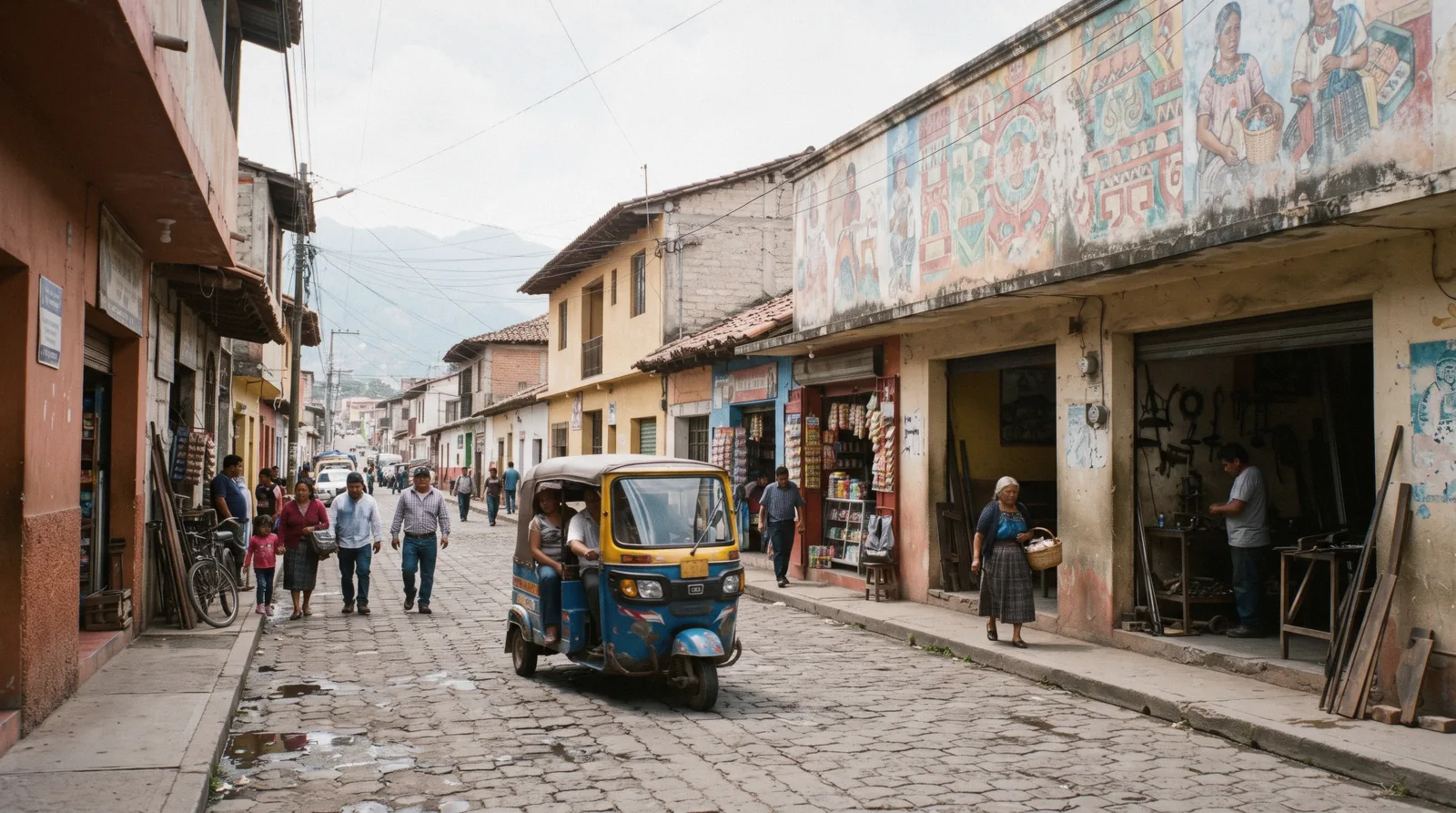
Jocotenango, Antigua Guatemala
Jocotenango, Antigua Guatemala begins where the grid ends, a 25-35 minute walk from Parque Central or a few minutes by tuk-tuk, and this page in this Antigua Guatemala city guide decides whether its coffee-and-culture edge suits you better than the colonial grid. The anchor is a working estate with a coffee museum, a Maya music museum and four courtyard kitchens. We price a full day at the finca from its own published figures, weigh the ride back into town, and ask honestly what the quiet is worth when dinner means a journey.
Quick answer What is out there, what it costs, how you get back
Jocotenango is the adjacent town just past the north-west line of Antigua Guatemala, and its anchor is the cultural finca with the coffee museum, a Maya music museum and four courtyard kitchens, 25-35 minutes on foot from Parque Central or minutes by tuk-tuk. A full finca day is cheap, museums at Q40 ($5.24), the one-hour coffee tour at Q100 ($13.09), lunch on the finca, and the platform's own coffee tour card at $69 is the guided alternative. The trade is the evening, dinner means riding back into the grid or eating early, so this area suits families with a car and travellers who came for the finca.
Key takeaways
- Against the grid, the six-area table is blunt about it: coffee people and families win here, nightlife does not exist on the finca.
- Cost anchors are low and published: museums Q40 ($5.24) adult, chocolate workshop Q180 ($23.60) for two hours, minigolf Q30 ($3.93), cash covers all of it.
- The ride is easy: any northbound chicken bus toward Chimaltenango passes through, or the municipal tuk-tuk tariff of Q10 ($1.31) agreed first.
Jocotenango Against the Colonial Grid
This table puts the adjacent town next to the colonial grid on walk time to the park, what you can reach on foot, eating options, the shape of the evening and the cost anchors that actually matter. The finca figures come from its own published prices, the walk times are the street-geometry estimates used across this guide, and no hotel rates exist here to quote.
| Aspect | Jocotenango | The colonial grid (Centro) |
|---|---|---|
| Walk to Parque Central | 25-35 minutes on foot (estimate) | 0-5 minutes |
| What you walk to | One estate: coffee museum, music museum, horses, minigolf | Everything: sights, markets, rooftops |
| Eating | Four kitchens with published hours, the last closes 4:30pm, Mondays thin | Every verified table in town (where to eat) |
| Evenings | Courtyard calm, dinner back in town or early here | Bar sound and foot traffic until late |
| Cost anchors | Museums Q40 ($5.24), tours Q100 ($13.09), chocolate Q180 ($23.60) | Coffee tour card $69, ChocoMuseo workshops from $20 (Q152.80), convent fees not published |
The finca day costs less than any grid evening, and the grid evening is the thing you ride home from. Figures current in Q3 2026.
The Coffee Tour Card, Framed Honestly
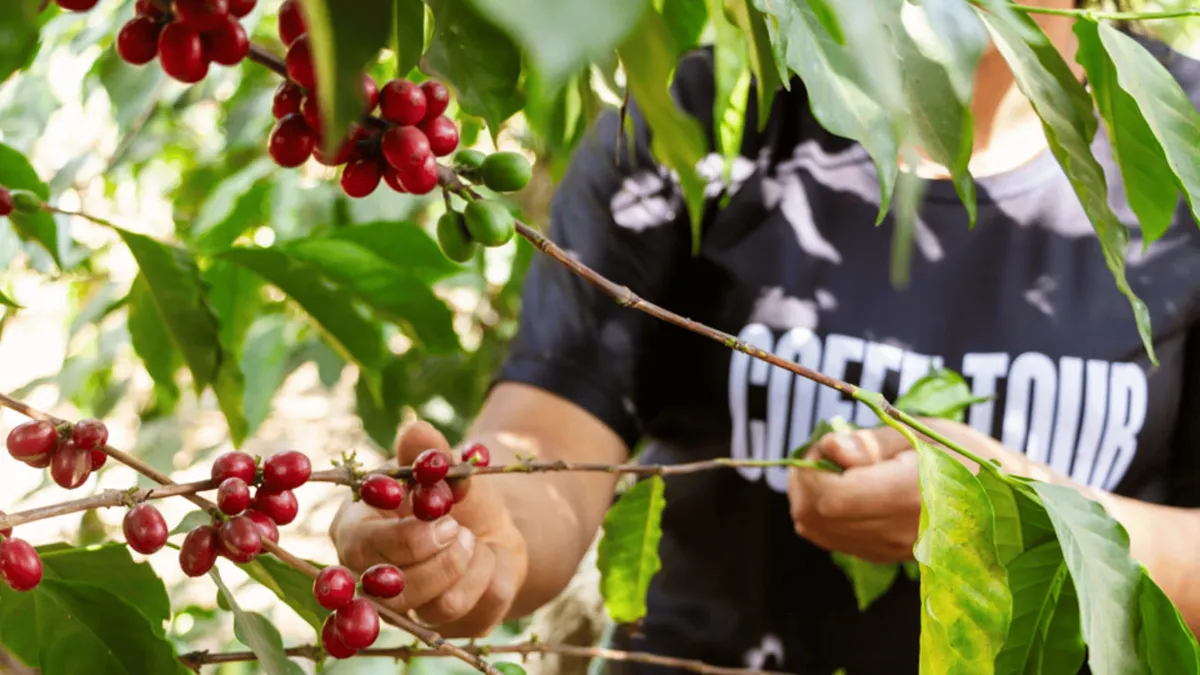
These are two different products and it pays to know which one you are buying. The finca runs its own one-hour coffee tour at Q100 ($13.09) at fixed times on the estate, walking distance from nothing and explained in the place the coffee grows, while the card below is the platform's generic coffee tour for the Antigua valley at $69 with a 4.9 rating, the right pick when you want transport and a wider route rather than one finca.
 from $69
Coffee Tour in Antigua Guatemala
3.5-hour small-group coffee tour from cherry to cup on an Antigua finca; pickup included.
Check AvailabilityPrices, ratings and details are the platforms' own.
Prices, ratings and details are the platform's own. dollar figures are the listed prices — the platform bills in your account's currency.
Where Jocotenango Starts
The town begins where the north-west city line ends, and the difference is audible within two blocks.
Jocotenango is a separate municipality with its own main road, its own workshops and its own pulperias, the small corner shops that sell everything by the unit. Cross the line from Antigua and the cobbles give way to ordinary asphalt, the colonial facades give way to metal workshops, tyre shops and hardware stores, and the rhythm shifts from tourism to daily life. Nobody comes here for architecture. They come for the anchor at the end of the road, the Centro Cultural La Azotea, a working estate whose grounds hold the Museo del Café, open daily 9am-6pm, and Casa K'ojom, the Maya and Guatemalan music museum, daily 9am-5pm. One honest cost note before you plan: the finca charges a general entry that is separate from the businesses inside, and the amount is not stated on its own page, so carry cash and expect a gate figure you cannot pre-check.
The town reads as one long main street with side lanes climbing the hillside, and the practical consequence is that almost everything a resident needs sits on that street, which is exactly why families who base here stop thinking about the grid during the week. Everything the estate publishes openly is in the full finca breakdown, and the ledger below turns it into a day plan.
A Day at the Finca, With Every Published Price
The estate publishes its activity prices openly, which is rare enough in this valley to be the reason to plan a day here.
The day that works is simple. Take the 10:00 coffee tour while the light is still soft and the courtyards are quiet, eat a courtyard lunch at one of the kitchens, then spend the early afternoon in the music museum before the heat settles in. If rain closes in, the chocolate workshop moves indoors and saves the afternoon. Quetzales are the operating currency at the gate and every figure below converts at this site's fixed $1 = Q7.64, say about everywhere. The estate's own tours run at fixed hours, so the morning you choose decides the whole day. Miss the 10:00 and you wait for the 11:00 or jump to the afternoon slots.
Plan the cash in layers, because the estate prices everything separately. The general gate entry is its own charge, the under-roof museum tickets are theirs, the guided tours are another line, and the chocolate workshop, the horses and the minigolf each price separately again. None of it is expensive, museums at Q40 ($5.24) and tours at Q100 ($13.09), but a family that assumes one ticket covers the estate will be counting notes at the second counter. Carry small denominations, because the gate makes change for a courtyard, not for a bank.
| What | Cost | When |
|---|---|---|
| Under-roof museums (adult) | Q40 ($5.24) | Museo del Café daily 9am-6pm, Casa K'ojom daily 9am-5pm |
| Under-roof museums (child) | Q30 ($3.93) | Same hours |
| Guided tour, coffee or music (adult) | Q100 ($13.09) | 1 h at 10:00, 11:00, 14:00, 15:00, 16:00 |
| Guided tour (child) | Q70 ($9.16) | Same fixed hours |
| Artisan chocolate workshop | Q180 ($23.60) for 2 h, Q130 ($17.02) for 1 h | Daily 10:00-16:00 |
| Horse ride | Q100 ($13.09), 30 min | Daily 10:00-16:00 |
| Minigolf | Q30 ($3.93) | Daily 10:00-17:00 |
| Bike rental | Priced at the gate, not stated | Daily 08:00-18:00 |
Eating on the Finca: Four Kitchens, Published Hours
Four kitchens share the estate, and every one of them publishes hours that end long before dinner.
El Maízal is the courtyard Guatemalan kitchen, Tuesday to Sunday 9am to 4:30pm, closed Mondays. La Azotea Carbón is the grill, running daily 8am to 6pm, the widest window of the four. The Azotea Deli runs 9am-6pm and the Azotea Jardín 10am-6pm, both daily, and Café de la Finca keeps weekday hours 9am-6pm with weekends from 8:30am.
The pattern matters more than any single menu: nothing here serves late. The finca is a lunch decision, not a dinner decision, and if you plan it as lunch you will eat well and leave satisfied. Plan it as dinner and you will be standing in a dark car park at seven wondering where the evening went, because the last kitchen shut hours ago.
Mondays are the thin day, with the main kitchen dark. The full list of verified tables in town, with their own published hours, lives in where to eat, and that is where your evenings should be booked if you sleep out here.
The Walk and the Ride Into Antigua
There are three ways between Jocotenango and the grid, and each one shapes the day differently.
On foot, count 25-35 minutes to Parque Central. That is a street-geometry estimate, the same method this guide uses everywhere, and the walk is downhill going in and uphill coming home, which you feel at this altitude. It is a genuinely pleasant walk in the morning, along a working road that shows you the town most visitors never see.
By tuk-tuk it is minutes. The municipal tariff is Q10 ($1.31) per ride, agree the fare before boarding because drivers routinely ask visitors for more, and service thins out toward 22:00, after which you are walking or waiting. By bus, any northbound chicken bus toward Chimaltenango passes through Jocotenango from the terminal behind El Mercado, and the getting around page maps the walk to that lot.
Fares for village hops are not published on any official source, so carry small notes and watch what locals pay. One caution belongs here: the UK FCDO advises against public buses in Guatemala, citing incidents on the routes and poor maintenance, so treat the bus as a daylight option and prefer the tuk-tuk or your own wheels after dark. A family with a car feels none of this friction, which is exactly why the area index describes this district the way it does.
| Way | Time or fare | The trade-off |
|---|---|---|
| On foot | 25-35 minutes each way (estimate) | Downhill into town, uphill home, at 1,500 m of altitude |
| Tuk-tuk | Q10 ($1.31) municipal tariff, minutes | Agree the fare first, cash only, service thins toward 22:00 |
| Northbound chicken bus | Village fare not published on any official source | Passes through toward Chimaltenango, a daylight option only |
| Your own car | Your schedule | Kills the evening friction entirely, the reason families pick this side |
Morning, Evening, and the Honest Pull Back
The area sells you a morning and asks you to pay for it at dusk.
Mornings on the main road are working mornings. Delivery trucks double-park outside the hardware stores, school runs fill the pavements with uniformed kids, the pulperias open their shutters, and the finca gates stay quiet until the tour hours begin. It is a real place doing real things, and if that sounds like colour rather than inconvenience, you will like it here.
Evenings are the trade. El Maízal closes at 4:30pm, the main road goes dark and residential soon after, and dinner in the grid means the ride back, about Q10 ($1.31) agreed in advance each way. Travellers who sleep here buy calm and pay for it in logistics, twice a day, every day.
There is no bar street to stumble onto, no rooftop to wander up to, no evening loafing. Say plainly who should not pick this area: anyone who wants to step out after dark into a bar street should stay in the grid, because the grid does that and Jocotenango does not. If you want that grid evening catalogued honestly, safety and scams covers what the nights are like in the centre.
Who Jocotenango Suits
Four kinds of traveller fit this district, and everyone else should sleep closer to the park.
Coffee and culture travellers come first, people who chose Antigua for the estates and the museums rather than the ruins, and who would rather spend an hour at the coffee museum than a morning in a cathedral queue. Families with a car fit naturally, because the drive kills the transport friction and a minigolf round at Q30 ($3.93) is the afternoon bail-out every parent eventually needs. Spanish students on homestay budgets priced out of the grid do well here too, since the schools in town publish weekly prices and the savings compound over a month of study. Rainy-day planners are the fourth group, because two museums and a chocolate workshop sit under one roof on a single estate, which makes this the strongest wet-weather play in the valley alongside the other rainy-day options.
One more group fits, with a condition. Returning visitors on a second Antigua trip, who have already done the ruins and want a working-week base, do well here, but only with the evening accepted in advance, because the quiet that makes the weeks cheap also makes them dark at seven. One honest gap for everyone: nobody publishing a hotel rate here shows up in any source we can verify, so the fit is described and the live search on where to stay does the quoting. If none of these descriptions sounds like you, the grid will serve you better.
The Coffee in the Cup, From the Industry's Own Profile
The estate sits inside one of Guatemala's named coffee regions, and the industry body publishes the numbers that explain what you are tasting.
ANACAFE, the national coffee association, profiles Antigua coffee on its Guatemalan Coffees brand site with a specific set of figures: growing temperatures of 64-72ºF, rainfall of 32-48 inches a year, humidity around 65 percent, and a valley wrapped by three volcanoes, Agua, Fuego and Acatenango. Its explanation of the taste is geological. Volcanic pumice soil retains moisture, which helps offset the region's low rainfall for Guatemala, and a fresh dusting of mineral-rich ash refreshes the soil.
The cup the body describes is elegant and well balanced, with a rich aroma and a very sweet taste. One honesty note: the association publishes the region's elevation as a bare figure with no unit on the page, so this guide repeats none of its numbers second-hand, and the harvest months are not stated there either. What the profile does settle is why a coffee museum on a working estate makes sense here, and why the cup you drink in the courtyard tastes different from the commodity roast at home.
The city's wider coffee scene, cup by cup, lives on cafes and coffee shops.
Rain, Volcano Status and the Under-Roof Argument
Jocotenango earns its keep as a plan-B district, because most of what it offers sits under a roof.
Two museums, a chocolate workshop and four covered kitchens sit on one estate, which makes this the strongest wet-weather play in the valley. The rainy season runs May to October, September is the wettest month by a distance, and no official closure list exists for what shuts in the rain, so plan on the weather-exposed things closing themselves: the ruins, the cobblestone errands and the hill viewpoint. The finca's indoor layer does not depend on the sky, which is why families with a rest day to burn do well here. One nuance from three decades of climate records: even the wet season carries a dry spell, the canícula, that typically starts in July and can run for weeks, and the nights stay cool in every month of the year, with lows in the mid teens Celsius, so the bag needs one warm layer even when the forecast says rain.
One status note belongs on any page that sells the valley outdoors. The high volcano summits sit suspended under the Fuego alert state, and this site does not present them as bookable until the authorities say otherwise, so the volcano cards you see elsewhere follow the hiking status page. Pacaya runs under its own operator sales, and Hobbitenango on the northern ridge sells a day pass with an add-on shuttle from its Antigua office. For a rain-day shortlist that spans the whole city, the rainy day guide collects the indoor options in one place.
Jocotenango on the Map
The carmine pin is the finca estate that anchors the town, plotted from the coordinates on the finca's own map embed. The green pins are the fixed points that define the walk into the grid, the hill on the way and the park at the end of it.
Next Door to Jocotenango
Centro Histórico
The colonial grid and every verified sight, 25-35 minutes on foot: the Centro Histórico.
25-35 min walkSan Felipe
The residential south-west and the cheapest beds in the valley's long-stay economy: San Felipe.
A ride across townWhere to stay
All six areas compared with walk minutes and honest gaps: where to stay.
The money questionJocotenango: Questions
Is Jocotenango part of Antigua Guatemala?
No. It is the adjacent municipality just over the north-west city line, close enough that the walk to the main square runs 25-35 minutes, but it has its own government, its own main road and its own rhythm. Most visitors cross the line without noticing, then notice immediately at the finca gates. See the Centro Histórico for what the grid side holds.
How do I get from Antigua to Jocotenango?
Three ways. A tuk-tuk takes minutes at the municipal Q10 ($1.31) tariff, agreed with the driver before you board. The walk is 25-35 minutes, downhill heading out and uphill coming home. Or any northbound bus toward Chimaltenango from the terminal behind El Mercado passes straight through. Full detail in getting around.
Is Jocotenango a good place to stay?
For coffee people, families with a car and rainy-day planners, yes, and for nightlife and walk-out dinners, no. The evenings here are dark and residential, and dinner means a ride into the grid. The honest comparison of all six areas is in where to stay.
What does a day at the coffee finca cost?
Museums are Q40 ($5.24) adult and Q30 ($3.93) child, the one-hour coffee or music tour is Q100 ($13.09) adult and Q70 ($9.16) child, the chocolate workshop is Q180 ($23.60) for two hours, minigolf Q30 ($3.93), plus a general gate entry whose amount is not stated, so carry cash. Lunch on the estate adds what your kitchen choice costs. The full ledger is on the finca page.
Is the finca coffee tour the same as the city coffee tour?
No. The estate runs its own hour at Q100 ($13.09) on the spot, among its own fields and drying patios, at fixed times from 10:00 to 16:00. The platform's coffee tour card costs $69, rated 4.9, and adds transport plus a wider valley route. Pick the finca if you want depth in one place, the card if you want breadth and a driver.
Can you walk from Jocotenango to Antigua at night?
You can, and you should not. The walk is unlit in stretches and the road is a working main road with fast traffic and no pavement worth trusting. Evenings here end with a tuk-tuk ride, agreed in advance, and service thins toward 22:00, after which options narrow fast. The context for after-dark caution is in safety and scams.
Is the finca walk doable with small children?
The 25-35 minute estimate assumes adult legs on a working main road with patchy pavements, so with small children ride out instead and save the walking for the estate itself, where the horses, the minigolf and the flat courtyards do the entertaining. The family layer across the city is on Antigua with kids.
What is open on Mondays at the finca?
Mondays are the thin day, but not a dead one. El Maízal, the main courtyard kitchen, closes every Monday, while the grill, the deli and the garden cafe run daily hours, the under-roof museums keep their 9am starts, and the guided tours and chocolate workshop run their fixed daily slots. Plan lunch around the grill or eat in town, and let the museums carry the morning.
Prices, hours and terms are set by the venue or operator and confirmed at checkout.
We may earn a commission if you book through one of our links, at no extra cost to you. Full affiliate disclosure