 Antigua Guatemala City Guide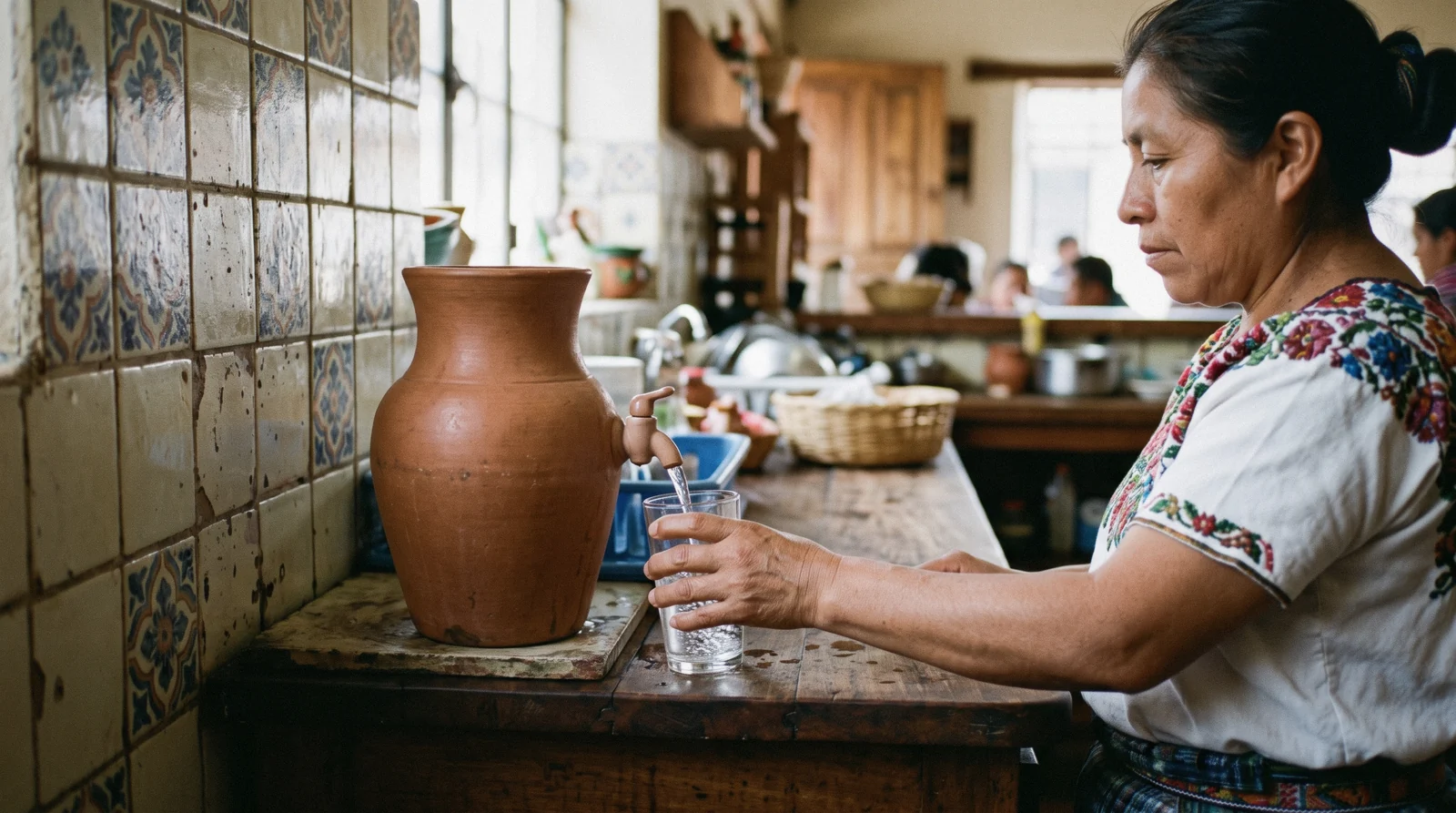
Can You Drink Tap Water in Antigua Guatemala?
Can you drink tap water in Antigua Guatemala? No, and this page does not dress the answer up: treat the tap as off-limits for drinking for the length of your stay, and drink filtered or bottled water instead. What makes this different from most city guides is what we could not find: no utility or municipal body publishes water-quality readings a visitor can check, so there are no official numbers to hide behind. This page prints that gap plainly, then covers how the city actually drinks, what to order in a restaurant, and what drinking well costs, with the food context on what to eat in Antigua. The water question is one page of the Antigua Guatemala city guide, whose homepage carries the rest of the practical layer.
Quick answer The no, the evidence gap behind it, and what to order instead
No. Do not drink tap water in Antigua Guatemala: the working default for visitors is filtered or bottled water, and hot, brewed drinks are the low-risk order. The reason this page gives a flat no rather than a cautious maybe is an evidence gap, not a scare story: no water utility or municipal source publishes visitor-facing quality readings for the city network, so there is nothing a traveller can check before filling a glass.
Key takeaways
- The negative finding in full: what we could and could not verify, including why no official number appears on this page
- In restaurants the default order is bottled, and the ice, coffee and fruit rules sort the menu into low-risk and judgment-call
- Brushing teeth with tap water is the classic gray zone; our practice and why we keep it simple
- The drinks that are always safe are brewed ones, and the coffee tour takes you to the farm for the best of them
What we could and could not verify
City guides usually quote a utility at this point. We have no utility to quote, and the audit below is why that absence is the finding.
We looked for a publishable source and did not find one. The municipal government's site is a JavaScript application with no extractable pages, so no water-quality document could be read from it. No water utility page surfaced in any of the source packs this site is built on, and none of the official tourism material carries a single sentence about drinking water.
That is three silences in a row, and together they mean this page cannot print a pH value, a treatment chain or a boil notice, because nobody publishes them in a form a visitor can read.
What the silence means in practice. A no based on published data, as in some European capitals, lets you drink with a number in hand. A no based on absent data is the travel-health default for most of Guatemala: the water may be treated at the plant and still pick up everything that happens between plant and tap, and no published reading tells you which is true on your street this month.
So the honest posture is the standard one: filtered or bottled for drinking, and treat every unpublishable claim about hotel filtration the same way you would treat a stranger's recommendation.
How the city actually drinks
Long before any guidebook arrives, the city has settled habits around water, and the visitor who copies them is copying decades of accumulated practice.
Filtered and bottled water is the norm in Antigua's kitchens, cafes and hotels. Gallon bottles sit on restaurant counters and fill the glasses that arrive before you order. Corner shops sell bottled water in every size.
And the houses that can afford one run a filter on the kitchen tap. This is practice, not an official rule: no Guatemalan authority statement in our sources says "the tap is unsafe", which is exactly why the page keeps saying that the default is a habit rather than a regulation. Copy the habit.
Brushing teeth is the question every traveller asks next, and our practice is simple: tap water for brushing is a risk most short-stay travellers do not need to take, so use bottled water for the rinse and stop thinking about it. Hotels sit on their own tanks and pipes, which is why the honest line about hotel water is that we could not verify any hotel's filtration claim: ask the desk what the dispenser in the lobby actually is, and drink from what they confirm rather than what the tap suggests.
Ice, coffee and fruit
The restaurant menu sorts itself into three risk tiers once you apply one rule: heat and brewing are your friends.
Coffee and tea are the safe orders everywhere, and Antigua is one of the places where that is a pleasure rather than a compromise: the valley is a named coffee region that ANACAFE's own profile describes as surrounded by the volcanoes Agua, Fuego and Acatenango, with volcanic soil and a cup the industry body calls elegant and well balanced. A brewed coffee is boiled water with a regional pedigree, which makes it the safest thing on any menu here.
Ice and salads are the judgment calls, and the honest answer is that no published rule separates good vendors from bad. In the better restaurants ice comes from filtered sources because their customers demand it, but we cannot print a list, so our practice is simple: tap water, no. Ice in a busy cafe catering to travellers, accepted.
Ice from a street cart, declined. Fruit you peel outlives fruit that was washed, and the same logic that keeps the tap out of your glass keeps unpeeled produce in the caution column. The full menu context, dish by dish, is on what to eat, and the cafe culture that roars on brewed drinks is on cafes and coffee shops.
What drinking well costs, compared
One number is missing from this section and one table is not, and the gap is the same honest finding repeated: bottled-water prices are simply not published by any source we checked.
We print no bottled-water price because no shop, market or official source publishes one. It is a cash purchase at a counter, and the range changes by block and by bottle size. What is published, and what actually shapes the purchase, is the cash context: ATM fees in Antigua are commonly reported at Q40 ($5.24) at BAC and Q49 ($6.41) at 5B per withdrawal, which argues for withdrawing once and paying for water, tuk-tuks and entrance donations from the same fold of notes.
Figures in this section were current in Q3 2026.
| Line | Figure | Status |
|---|---|---|
| Bottled water, shop or restaurant | Not published anywhere we checked | Cash purchase. Carry small notes |
| ATM withdrawal fee, BAC | Q40 ($5.24) commonly reported | Community-maintained source, dated |
| ATM withdrawal fee, 5B | Q49 ($6.41) commonly reported | Community-maintained source, dated |
| Refill from a filtered dispenser | Free where a hotel or cafe provides one | Ask what the dispenser is. No filter claim is published |
The climate is the reason the habit matters more here than at sea level: Antigua sits at about 1,530 meters, where average highs run 24.0 to 27.0 °C year-round and April, the warmest month, reaches 27.0 °C, so a walking day spends real water even before you feel the altitude. Carry a bottle from breakfast, refill where a dispenser is confirmed, and buy the rest as you go.
Can you drink tap water in Antigua Guatemala: questions
Can you drink tap water in Antigua Guatemala?
No. No utility or municipal source publishes quality readings a visitor can check, so the working default is filtered or bottled water, and hot brewed drinks are the safe order. The evidence gap is laid out in the verification section.
Is the water safe in Antigua Guatemala hotels?
Treat each hotel as its own system: many provide filtered dispensers, but no hotel filter claim is published anywhere we could verify, so ask the desk what the dispenser is and drink from that rather than the bathroom tap. The cash and fee context for buying bottled water is on what Antigua costs.
Can you have ice in drinks in Guatemala?
In traveller-focused cafes and restaurants, ice is usually filtered because their customers demand it, but no published rule separates vendors, so our practice is to accept ice in busy established cafes and decline it from street carts. The safe orders, coffee chief among them, are in the ice and coffee section.
Can you brush your teeth with tap water in Antigua Guatemala?
We advise against it for short stays, on the same logic as drinking: bottled water for the rinse removes the last uncontrolled variable, and it costs almost nothing. The practice, and the hotel-dispenser question that goes with it, is in how the city drinks.
How much does bottled water cost in Antigua Guatemala?
No price for bottled water is published by any source we checked, so we print none. It is a small cash purchase, and the sourced figures that shape it are the ATM fees of Q40 ($5.24) at BAC and Q49 ($6.41) at 5B, compared in the costs section.
Prices, hours and terms are set by the venue or operator and confirmed at checkout.
We may earn a commission if you book through one of our links, at no extra cost to you. Full affiliate disclosure